The Arrival of Our Endangered Visayan Spotted Deer Fawn
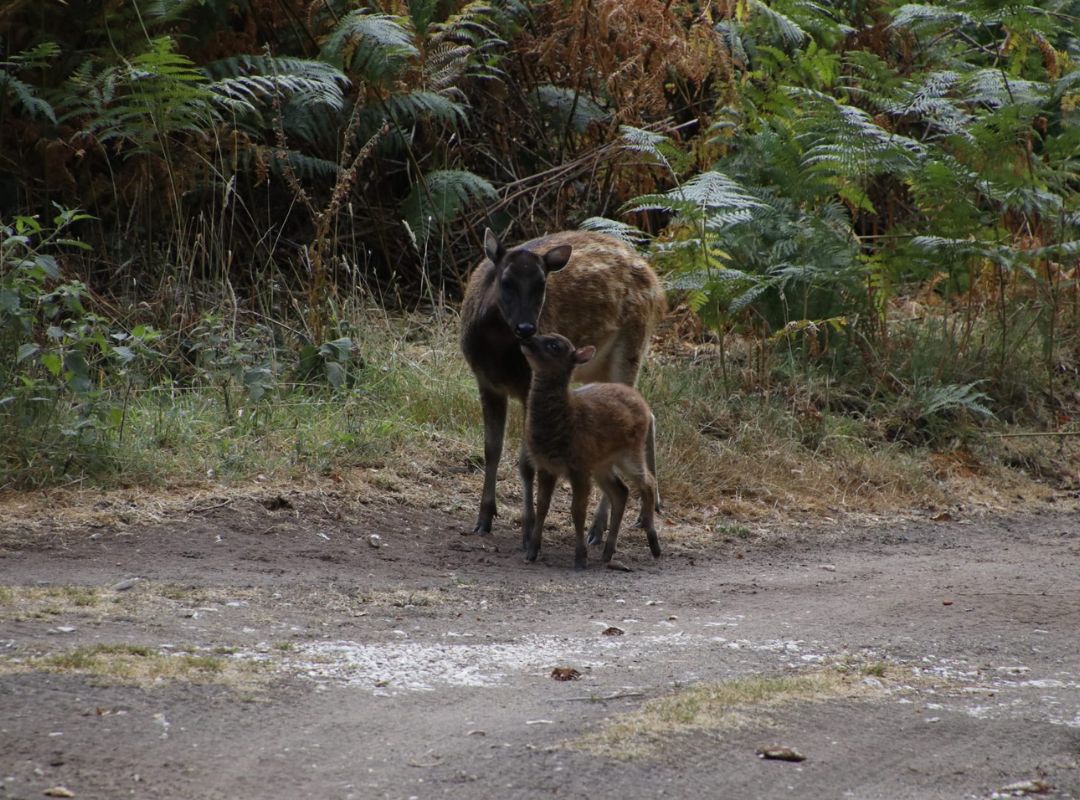
There has been a very special arrival at Watatunga Wildlife Reserve. Our first Visayan spotted deer fawn was born following the arrival of our new breeding group last year.
Whilst we knew one of our females was expecting, the arrival of the fawn wasn’t quite as straightforward as we might have hoped. For three weeks, its mother kept her new arrival carefully hidden among the woodland, just as she would naturally do in the wild. It took plenty of searching, patience and a few very determined walks through the reserve before we finally got our first glimpse of the new fawn, and even then, it was the mother who decided when it was time for the calf to be seen.
Settling into life at Watatunga
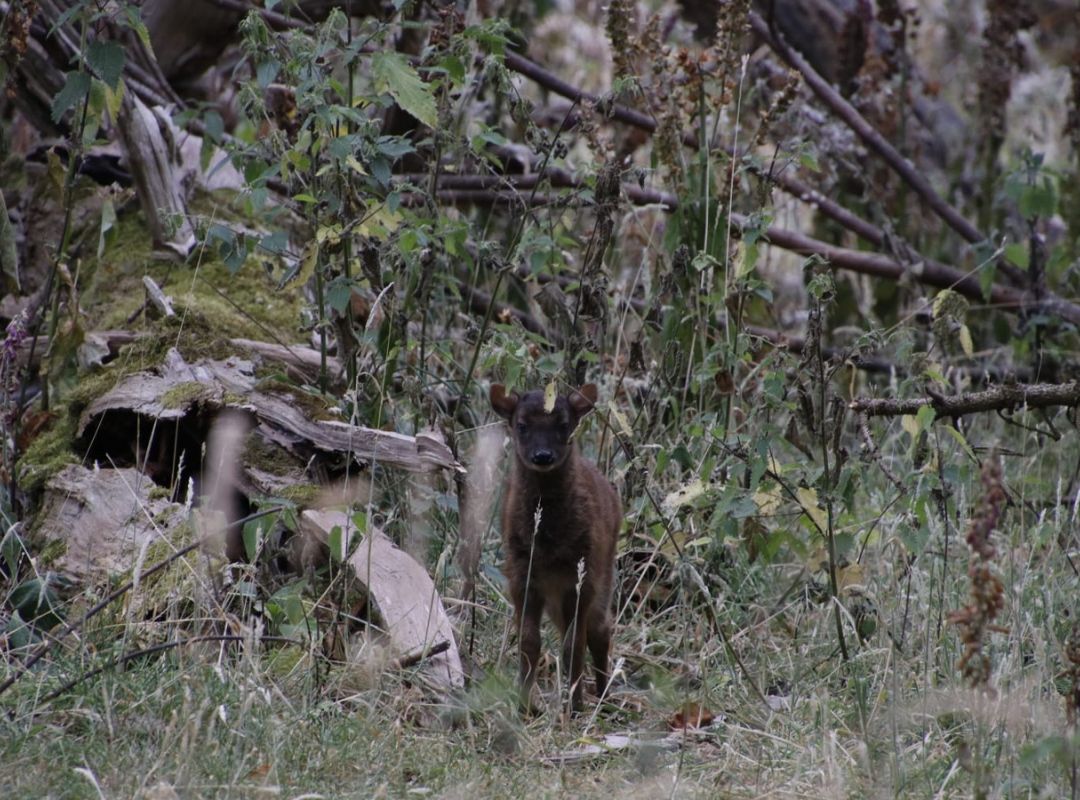
Since arriving at Watatunga, the Visayan spotted deer have settled in perfectly. Both of the girls are incredibly confident now that they’ve settled in more, and they have been glued to each other’s sides since day one. We quarantined both females and the male in the soft-release area within the reserve. This allowed them to form a bond before we released them into the 170 acres. We had to ensure that they would stick together, as it increased our chances of finding them daily.
The male is far more confident than both of our ladies and can often be found prancing around as bold as brass with our Bongo, Wildebeest, Water Buffalo and Indian Sambar! The girls tend to stay around the woodland areas by Tracks 1, 2, and 3. The male uses the entirety of the reserve, and no two days are the same with him.
How did we know a fawn was on the way?
Both of the girls were pregnant. Their body shapes changed over time, and it was impossible to deny the fact that over the past few months their bellies were very round! Both of their behaviour changed too. They seemed much more guarded and spent a lot more time hiding in the woodlands, as opposed to grazing out in the open areas.
Around three weeks before the first birth, we saw teats appear and a small udder started to form. This solidified our theory that she was pregnant.
Deer species can vary in terms of when they display certain behaviours. For example, in some species they will start to bag up a few days before giving birth, some will bag up around a week before and some a few weeks before. For this species, it seemed that a few weeks before was right for them. Both of our females have teats now, and the other female has a humungous belly, so we are expecting another calf any day now.
A mother who knew exactly what she was doing
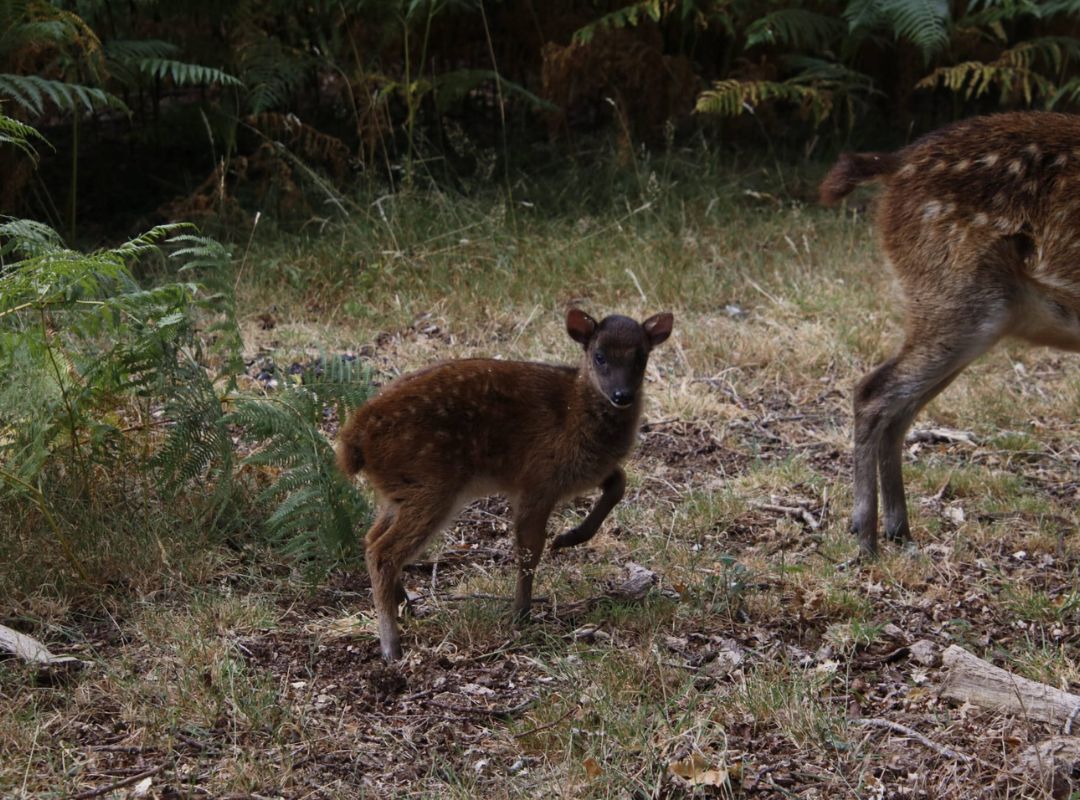
The arrival of the fawn wasn’t immediately obvious to us. Deer naturally find hidden spots to leave their babies, just as they would in the wild, and this female did her job incredibly well. We knew the day that she calved as she had a wet back end, that was perfectly clean and a little bit swollen. Being her first fawn, we were quite concerned about whether she would know how to rear it or not. But due to the cleanliness of her back end, we had no doubt about her ability to rear the fawn. If she was keeping herself clean, chances are she was doing the same with the fawn.
Despite this, we tried walking for around two to three hours every night in 30-odd-degree heat and had absolutely no luck. We knew she had the fawn as she refused to leave the area and was spending every moment in that area of woodland, but she kept it hidden. With some deer species, if you walk in the direction of their calf, they will run at you and intercept you. She was far smarter. She just pretended as if she wasn’t phased at all, as if she didn’t have a fawn.
Three weeks to the day we suspected that she fawned, she finally brought her fawn out in front of a tour. It was a very special first sighting, although she is still very secretive. But to us, this just means that she’s doing an amazing job!
A tiny fawn with a very fierce mum
In general, Visayan spotted Deer are a fairly confident species of deer. Don’t let their body size fool you, they are full of confidence. Since this female has had her baby, she has been seen chasing off Sitatunga, Barasingha and Père David’s deer that are merely occupying the same area of woodlands as her fawn!
They are fierce mums and defend their babies with every ounce of fibre in their body. The fawn may be tiny, but its mother is certainly making sure that everyone knows to give it some space.
What does the arrival mean for Visayan spotted deer conservation?
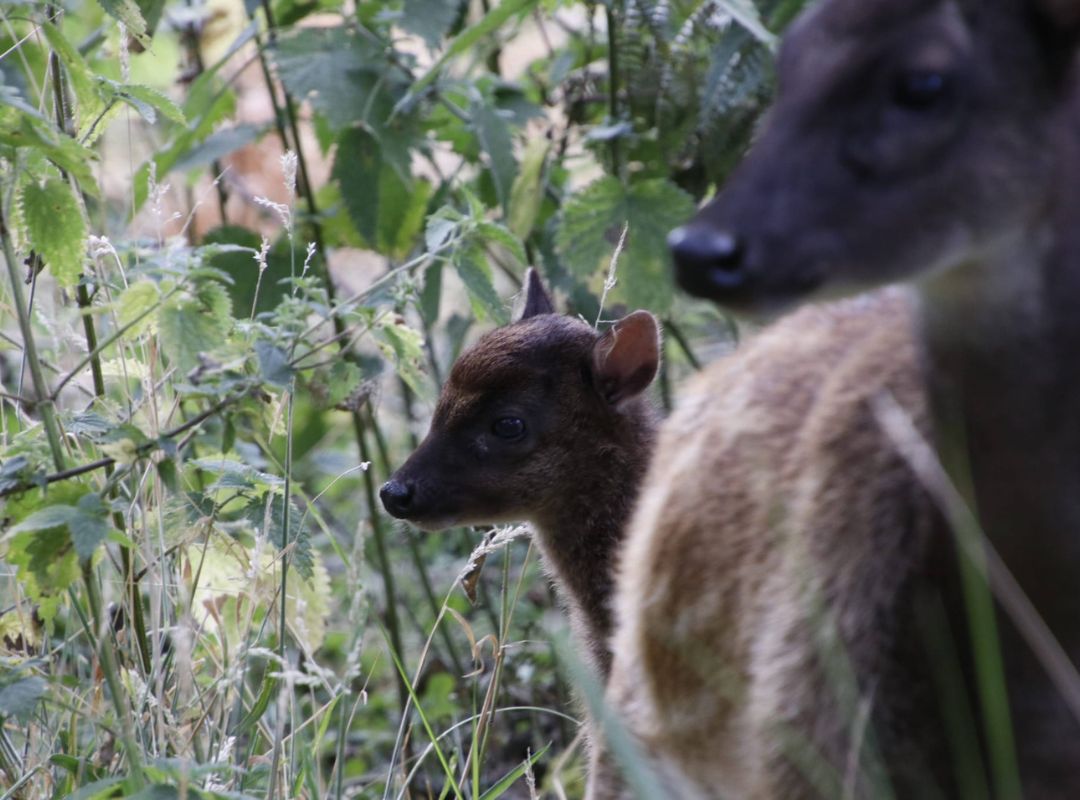
Listed as Endangered on the IUCN Red List, fewer than 700 individuals are believed to remain in the wild, so this is a huge achievement for Watatunga. It is a great contribution towards the EEP and once again it shows how deer can thrive in a hands-off management approach within naturalistic settings that simulate their environment in the wild.
Visayan spotted deer thrive in dense coverage, and the behaviour of this new mother is a wonderful example of how their natural instincts can still be seen when they are given the space and environment to express them. Rather than needing to be closely managed, she has been able to find a secluded area of woodland, hide her fawn and care for it in much the same way she would in the wild.
Another Visayan spotted deer fawn on the way?
And the story may not end with this fawn. Our second female is showing all the signs of pregnancy and has a humungous belly. We were expecting her to fawn within the following month, but she is yet to have it. Keep your eyes peeled on our tours and stay updated via our social media.