
How Watatunga School Trips Bring Wildlife Learning to Life
Why Watatunga School Trips Make a Difference
At Watatunga, we believe the best way to learn about wildlife and conservation is to see it in action. Our school trips at Watatunga Wildlife Reserve immerse students in the natural world, giving them the chance to explore, observe, and discover in ways that classroom lessons alone can’t offer.
School trips at Watatunga are more than just a day out, they’re an opportunity for students to form personal connections with wildlife, understand the impact humans have on ecosystems, and see the importance of conservation first-hand.
Learning in the Wild
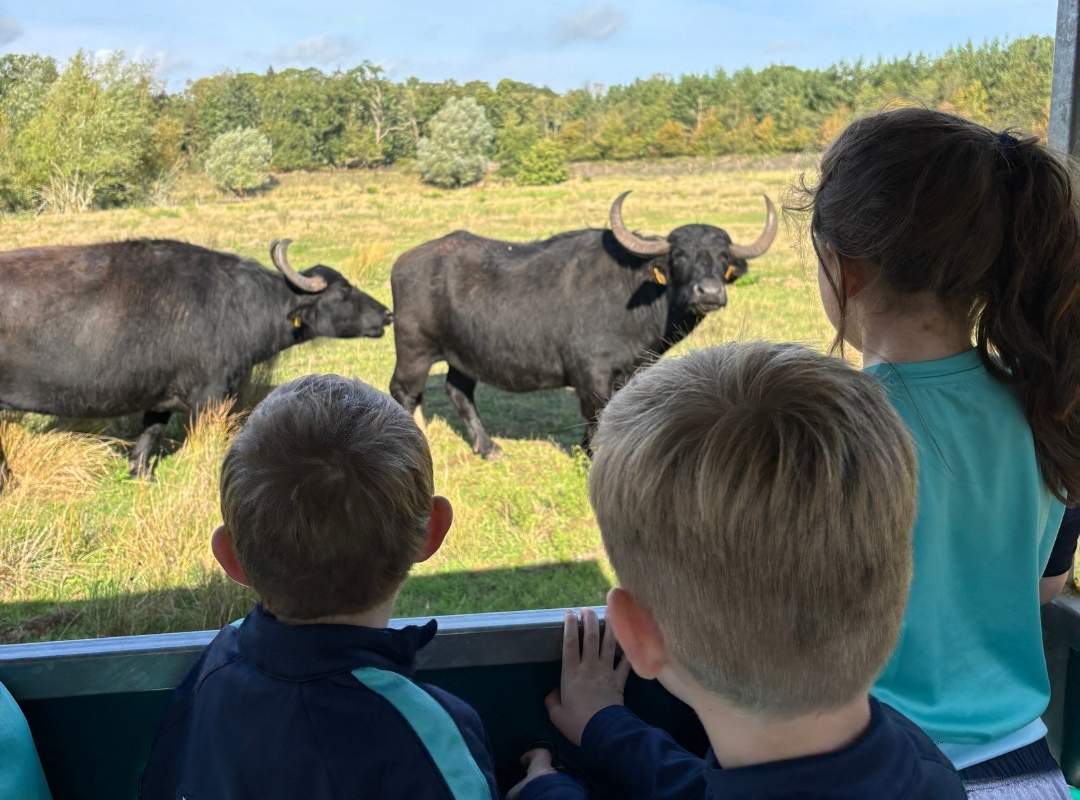
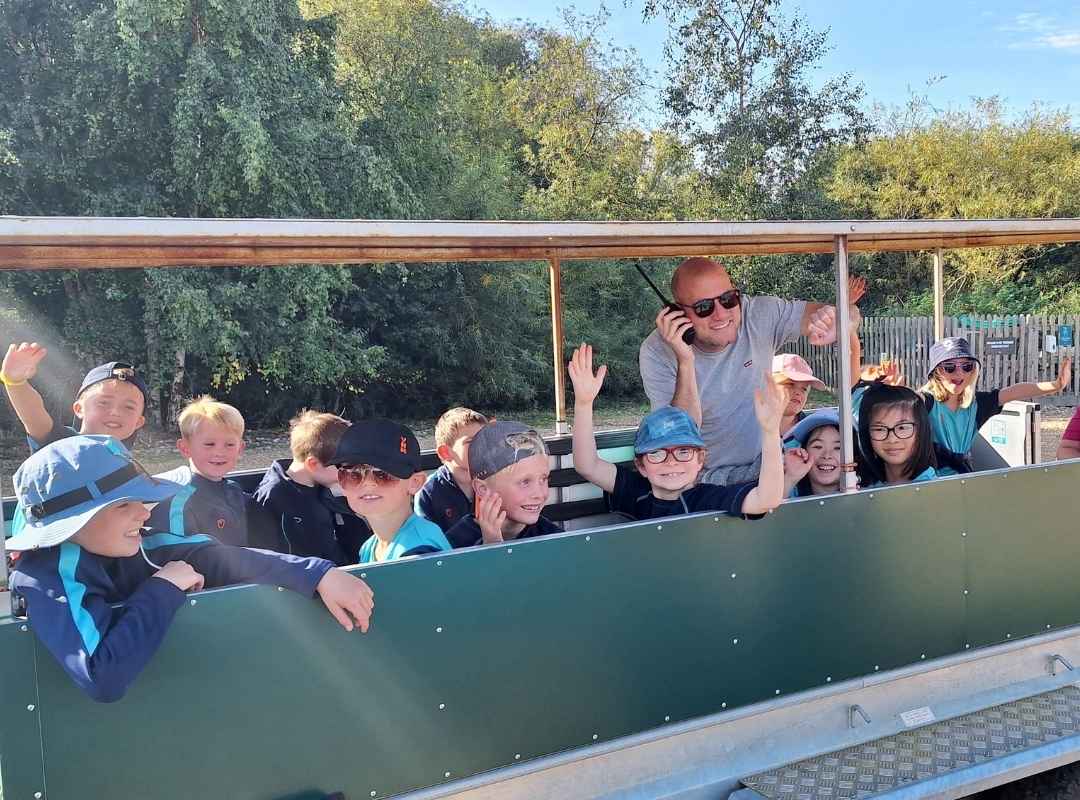
At Watatunga, a school trip with us includes an hour and thirty-minute tour of the reserve, whereby students can see animals in a semi-wild habitat. They can watch herds of deer, antelope and birds moving freely, behaving naturally, and interacting with their environment. This helps learners understand the importance of habitat, social behaviour, and the challenges species face, concepts that are far more memorable when seen rather than read about.
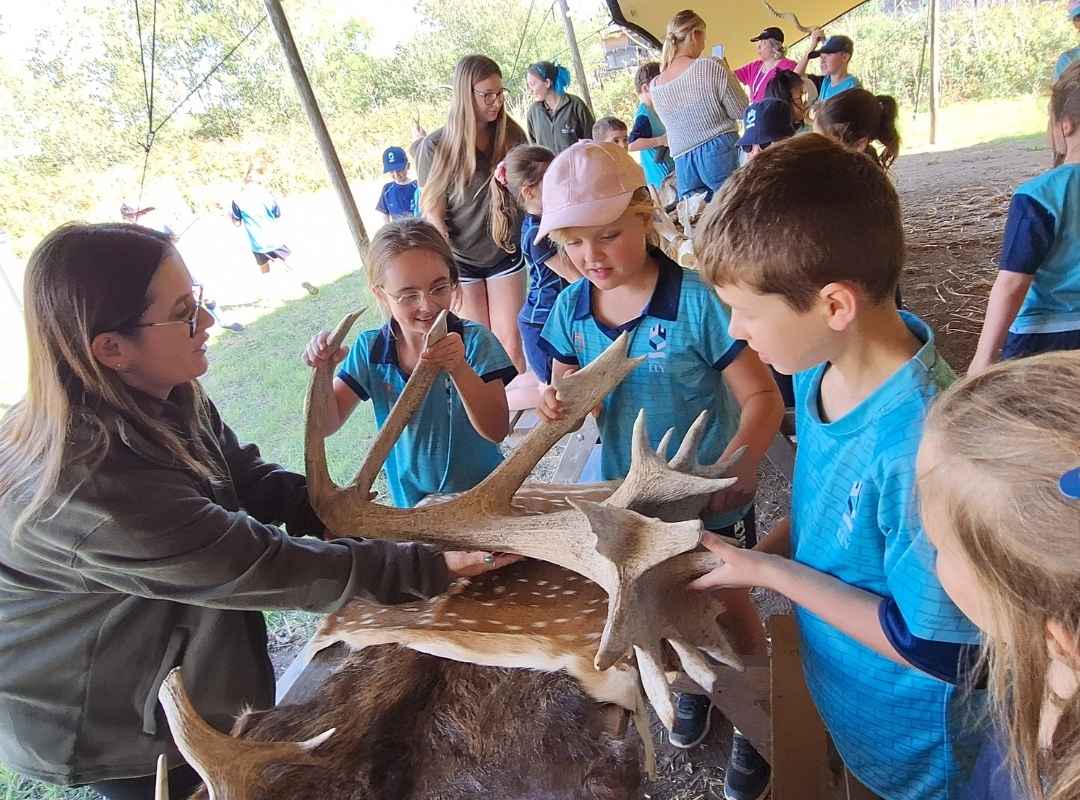
Following the tour, students take part in an interactive education session where they can explore key biological and conservation concepts in more depth. These sessions are tailored to the age and Key Stage of the group and covers topics such as adaptations, classification, horns and antlers, evolution and behaviour. By linking classroom theory to real-world examples, learners gain a deeper, more engaging understanding of wildlife and conservation.
By combining a guided 1h30 tour, a curriculum-linked education session, and outdoor-based learning in the BioBase, students don’t just gain knowledge on our school trips, they develop empathy, curiosity, and a sense of responsibility that can last a lifetime and influence their own behaviour. Watatunga provides a truly immersive experience that brings the classroom to life and inspires the next generation of conservationists.
Curriculum Connections for All Key Stages
We design our lesson plans to support the National Curriculum across all Key Stages. Educational sessions are integrated into each visit and combined with guided observations during the tour to create a full, immersive learning experience.
KS1 (Ages 5–7)
- Lesson focus: Animal habitats, horns and antlers, adaptations, and classification.
- Curriculum links: Animals including humans; living things & habitats; seasonal changes.
- Watatunga experiences: Observe free-roaming animals, spot adaptations and horns/antlers, and explore habitats.
KS2 (Ages 7–11)
- Lesson focus: Animal habitats, horns and antlers, adaptations, and classification (building on KS1).
- Curriculum links: Living things & habitats, evolution & inheritance, animals including humans.
- Watatunga experiences: Observe mixed-species herds, explore survival adaptations, classify species, study horns and antlers, analyse diet and behaviour.
KS3 (Ages 11–14)
- Lesson focus: Adaptation and competition, classification, evolution, and natural selection.
- Curriculum links: Living organisms & ecosystems, evolution, human impact, scientific investigation.
- Watatunga experiences: Observe social behaviour and interactions, explore adaptations and competition, classify species, discuss natural selection and evolution, analyse horns/antlers and diet, and use BioBase to learn ecology survey methods.
KS4 (Ages 14–16)
- Lesson focus: Adaptation, classification, evolution, ecosystems, and interdependence.
- Curriculum links: Biology GCSE topics including adaptation, ecosystems, inheritance, evolution, sustainability, and human impacts.
- Watatunga experiences: Habitat studies, adaptations, classification, horns/antlers, diet and behaviour, and use BioBase to learn ecology survey methods.
KS5 / A-Level (Ages 16–18+)
- Focus: Advanced ecology, conservation biology, and independent research.
- Curriculum links: A-Level biology (evolution, adaptation, population dynamics, interspecific interactions, ecosystems), environmental science.
- Watatunga experiences: observation of rare species, habitat mapping, in-depth study of adaptations, classification, horns/antlers, and diet/behaviour.
Enhancing Your School Trip: BioBase & Inside Out
BioBase: Research and Interactive Learning
The BioBase is an optional, interactive space for KS2 students and above, where learners can take their field observations further and experience what it’s like to be a young scientist. Students explore ecology through hands-on activities such as identifying plants and insects, investigating habitats, and constructing food webs to understand the connections between species. They collect and analyse real data, develop problem-solving skills, and link what they see in the wild to broader conservation concepts. The BioBase turns curiosity into practical scientific investigation, giving students a deeper understanding of ecosystems and the role humans play in protecting them.
Inside Out: Bushcraft and Outdoor Skills
Students of all ages can enjoy hands-on bushcraft activities in a safe, guided environment with our partner. Inside Out encourages teamwork, observation, problem-solving, and practical engagement with nature. It’s a fun, active way to bring outdoor learning to life.
A school trip to Watatunga Wildlife Reserve offers an unforgettable opportunity for students to learn, explore, and connect with nature in a meaningful way. If you are interested in booking a school trip with us, then please get in contact. Thank you to King’s Ely for the photos from their school visit!